
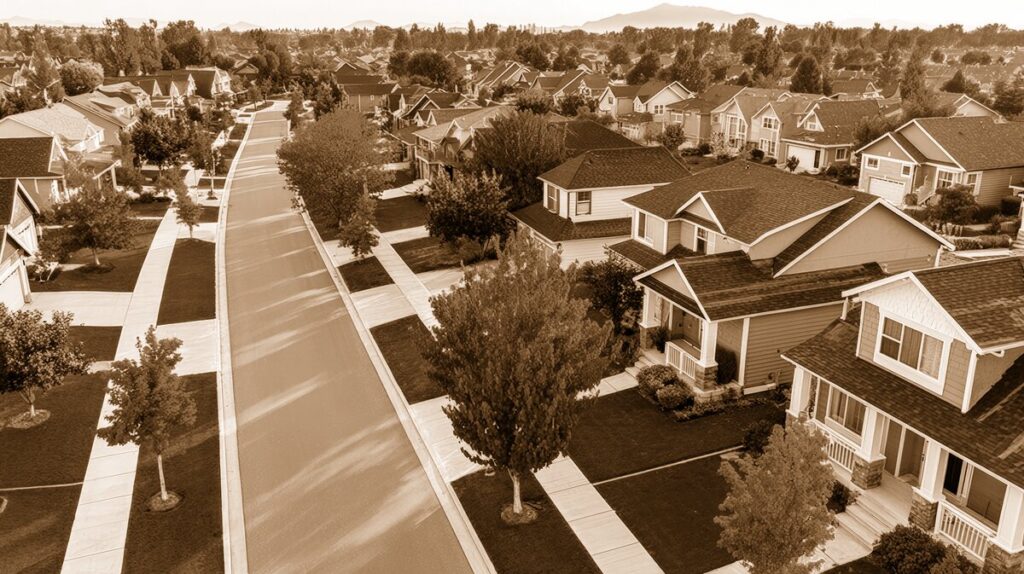
A Neighborhood Between Mountain and Meadow
Tamarisk occupies a memorable corner of southern Lakewood, tucked near South Indiana Street, Morrison Road, Bear Creek Lake Park, and the foothills. It is a neighborhood where suburban streets meet broad mountain views, open land, and some of the most appealing outdoor spaces in the city. For longtime residents, Tamarisk feels both established and quietly evolving—a place shaped by postwar growth, planned subdivisions, nearby recreation, and a strong connection to the landscape.
The neighborhood is commonly associated with the area north of Bear Creek Lake Park and near the Green Mountain foothills. City materials identify Tamarisk as one of the communities surrounding Bear Creek Lake Park, alongside Summit Glen, Coyote Gulch, Solterra, and other southern Lakewood subdivisions. ([usace.contentdm.oclc.org](https://usace.contentdm.oclc.org/digital/api/collection/p16021coll7/id/765/download?utm_source=openai))
Unlike older Lakewood districts such as West Colfax or Two Creeks, Tamarisk was not built around a historic commercial corridor or an early railroad station. Its story is instead part of the larger suburban transformation that reshaped Lakewood during the second half of the twentieth century.
From Agricultural Edge to Suburban Community
For much of Lakewood’s early history, the land west of Denver was a mix of farms, ranches, irrigation ditches, open fields, and scattered homes. The area’s development followed transportation routes such as Morrison Road, the old roads toward the foothills, and later major highways. Lakewood’s historic surveys describe the region as largely agricultural through the late nineteenth and early twentieth centuries, with growth gradually encouraged by railroads, water infrastructure, and improved roads. ([lakewoodco.gov](https://www.lakewoodco.gov/files/assets/public/v/1/planning/comprehensive-planning/pdfs/historic-preservation/pre-1920s-survey-june-2020-final.pdf?utm_source=openai))
The Tamarisk area remained part of this broad rural landscape longer than neighborhoods closer to West Colfax. As Denver’s western suburbs expanded after World War II, farmland and undeveloped parcels began giving way to homes, townhouses, schools, and planned residential communities.
Housing records indicate that the larger Tamarisk area developed primarily from the 1960s through the 1990s, with a median construction year in the early 1980s. That timeline reflects Lakewood’s suburban boom: modest single-family homes, attached housing, landscaped streets, and communities designed around automobile access and nearby recreation. ([point2homes.com](https://www.point2homes.com/US/Neighborhood/CO/Tamarisk.html?utm_source=openai))
By the late twentieth century, Tamarisk had become a recognizable residential neighborhood rather than simply an edge-of-town subdivision. Its location gave residents convenient access to Morrison Road, South Kipling Street, U.S. 285, and Bear Creek Lake Park while maintaining a quieter atmosphere than the busier commercial districts farther east.
How Tamarisk Got Its Name
The name “Tamarisk” appears in official subdivision and property records, including the Tamarisk Subdivision and later filings along South Indiana Street. ([lakewoodco.gov](https://www.lakewoodco.gov/Local-Government/Departments/Community-Resources/Parks-Forestry-and-Open-Space/A-to-Z-Park-List/Tamarisk-Open-Space?utm_source=openai))
The exact naming story is not clearly documented in the publicly available city histories. The most natural explanation is a reference to the tamarisk shrub, a hardy, drought-tolerant plant associated with dry western landscapes. Tamarisk trees and shrubs have long been used in Colorado landscaping and windbreaks, particularly in places where water conservation and resistance to harsh conditions matter.
Whether the name was chosen for actual plantings, a developer’s western-themed marketing, or simply the sound of the word, it suits the neighborhood. Tamarisk suggests resilience, sun, wind, and a landscape that can thrive at the edge of the plains and foothills. It also distinguishes the community from Lakewood’s more street-grid-based neighborhoods, giving it a name tied to place and atmosphere rather than to a prominent individual.
A Key Milestone: Tamarisk Open Space
One of Tamarisk’s most important modern landmarks is Tamarisk Open Space at 3100 South Indiana Street. The City of Lakewood acquired the approximately 10-acre property in 1998 as part of Tract G in the Tamarisk subdivision. The land had originally been considered for possible school use, but Jefferson County schools ultimately did not need the site. ([lakewoodco.gov](https://www.lakewoodco.gov/Local-Government/Departments/Community-Resources/Parks-Forestry-and-Open-Space/A-to-Z-Park-List/Tamarisk-Open-Space?utm_source=openai))
In September 2020, Lakewood City Council formally designated the property as open space or park property. The site remains largely natural, with unpaved walking trails and no major developed facilities. That simplicity is part of its appeal. Rather than functioning as a traditional playground park, Tamarisk Open Space provides breathing room within the neighborhood—an undeveloped patch where residents can walk, watch birds, observe seasonal changes, and enjoy a sense of the landscape that existed before the houses.
The city’s park planning documents list Tamarisk Tract D and Tract G among its open-space holdings, showing that the neighborhood includes more preserved land than a quick drive through the streets might suggest. ([lakewoodco.gov](https://www.lakewoodco.gov/files/assets/public/v/1/community-resources/parks/241108-parkland-dedication-final-report-appendices.pdf?utm_source=openai))
The Influence of Bear Creek Lake Park
Although Bear Creek Lake Park is not entirely within Tamarisk, it is central to the neighborhood’s identity. The park’s trails, lake, open meadows, boating areas, and views toward the foothills have made southern Lakewood especially attractive to people who want suburban convenience without giving up access to the outdoors.
Residents can connect with the Bear Creek Trail system and reach nearby destinations including Bear Creek Greenbelt, William F. Hayden Park on Green Mountain, Red Rocks Park, and Dinosaur Ridge. ([usace.contentdm.oclc.org](https://usace.contentdm.oclc.org/digital/api/collection/p16021coll7/id/765/download?utm_source=openai)) For many Tamarisk households, the park serves as an unofficial backyard—an everyday place for dog walking, cycling, fishing, wildlife watching, and evening strolls.
This closeness to recreation has also influenced the neighborhood’s housing patterns. Tamarisk includes detached homes, attached housing, and townhome communities. Some of the newer townhomes along South Indiana Street were built in the early 2000s, adding a more contemporary layer to a neighborhood that already contained several decades of housing styles. ([coloradohomeblog.com](https://coloradohomeblog.com/lakewood-co/tamarisk-townhomes/?utm_source=openai))
Tamarisk Over the Decades
The Tamarisk of today is the result of several waves of change.
- 1960s and 1970s: Residential development expanded as Lakewood grew into a major suburban city.
- 1980s and 1990s: More homes and attached housing filled in the community, creating the established neighborhood pattern residents recognize today.
- Late 1990s: The city acquired land for municipal purposes, preserving what would eventually become Tamarisk Open Space.
- Early 2000s: Newer townhome construction introduced additional housing choices near South Indiana Street.
- 2020s: The open-space designation strengthened the neighborhood’s identity as a community connected to nature and outdoor recreation.
The neighborhood has also matured socially. Older homes have been updated, landscaping has filled out, and generations of residents have come and gone. Young families, longtime homeowners, renters, and outdoor enthusiasts now share the same streets and trails.
What Makes Tamarisk Special
Tamarisk does not rely on a single historic building or famous landmark to tell its story. Its heritage is found in the relationship between homes, open land, nearby parks, and the changing face of Lakewood.
It is a neighborhood shaped by the transition from agriculture to suburbia, but it has not lost its sense of spaciousness. The broad skies, foothill views, proximity to Bear Creek Lake Park, and quiet corners near South Indiana Street give Tamarisk a distinct character.
For longtime residents, the neighborhood’s greatest treasure may be its balance. Tamarisk is close to Morrison Road and regional highways, yet it can feel peaceful. It is modern enough to offer convenient housing and amenities, yet open enough to remind us of southern Jefferson County’s rural past. And with Tamarisk Open Space now protected for the future, the neighborhood has preserved a small but meaningful piece of the landscape that helped make Lakewood special in the first place.